
.%20.jpeg)
Open Yassine Sellame’s Instagram feed, and you enter a version of Morocco shaped through skateboarding. Portraits sit beside blurred night shots, scratched film negatives, concrete plazas, worn shoes and fleeting tricks captured somewhere between Casablanca, Marrakech and Tangier. Spend enough time with the images and another story begins to emerge: one about community, movement and the way skateboarding changes how a city is experienced.
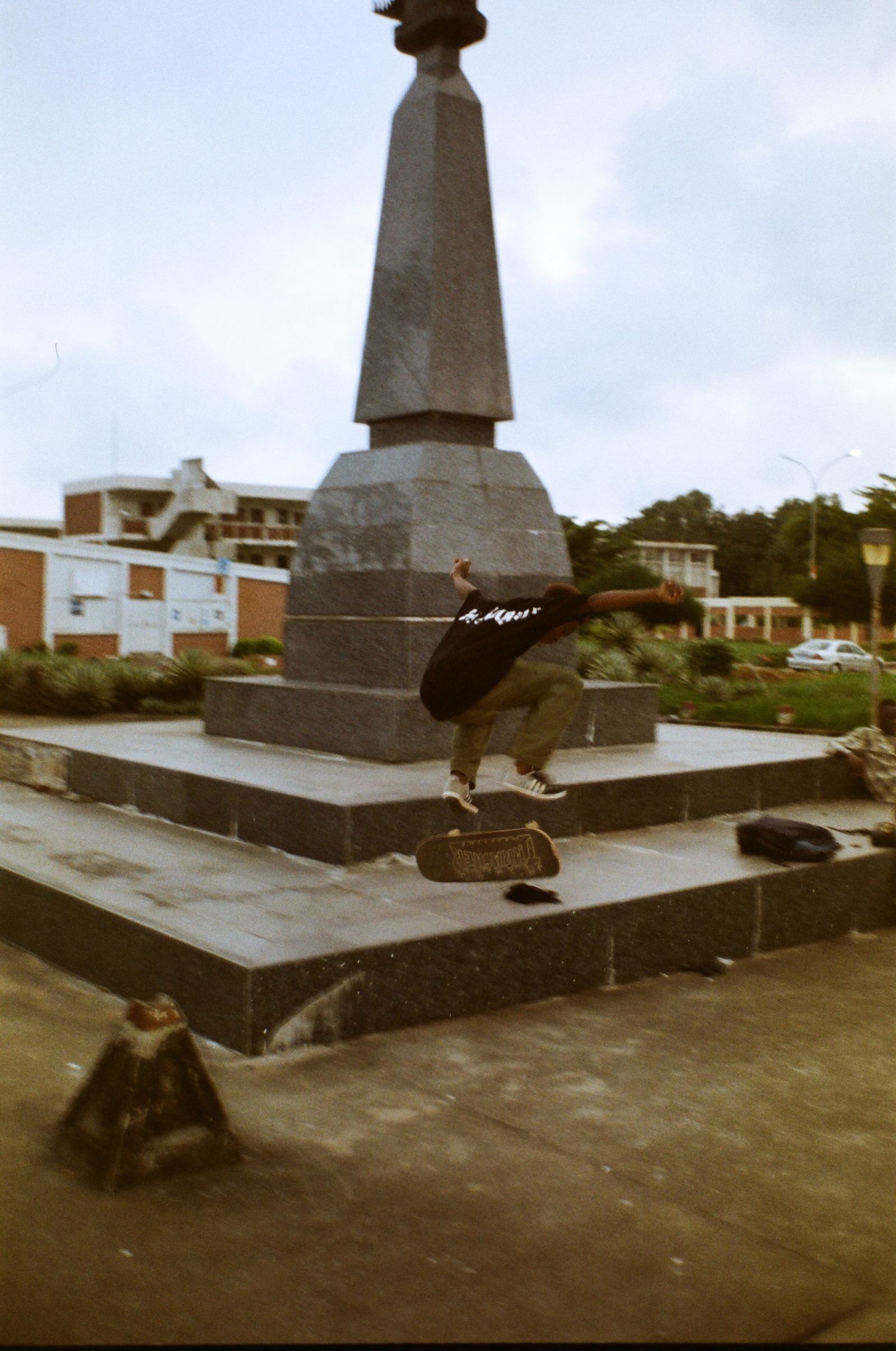
For Marrakech-born Sellame, skateboarding arrived before photography. Growing up in the city, he discovered the culture the way many skaters of his generation did, online, through hours spent watching skate videos and searching for signs that any of it existed in Morocco. Eventually, that curiosity led him to Gueliz, Marrakech’s modernist quarter, where he found local skate spots and, more importantly, a community.
That relationship between skateboarding and urban space would go on to shape much of Sellame’s work. Studies later took him to Fes, while increasing time spent in Casablanca exposed him to a larger, more webbed and active skate scene that would later become a key point of reference.
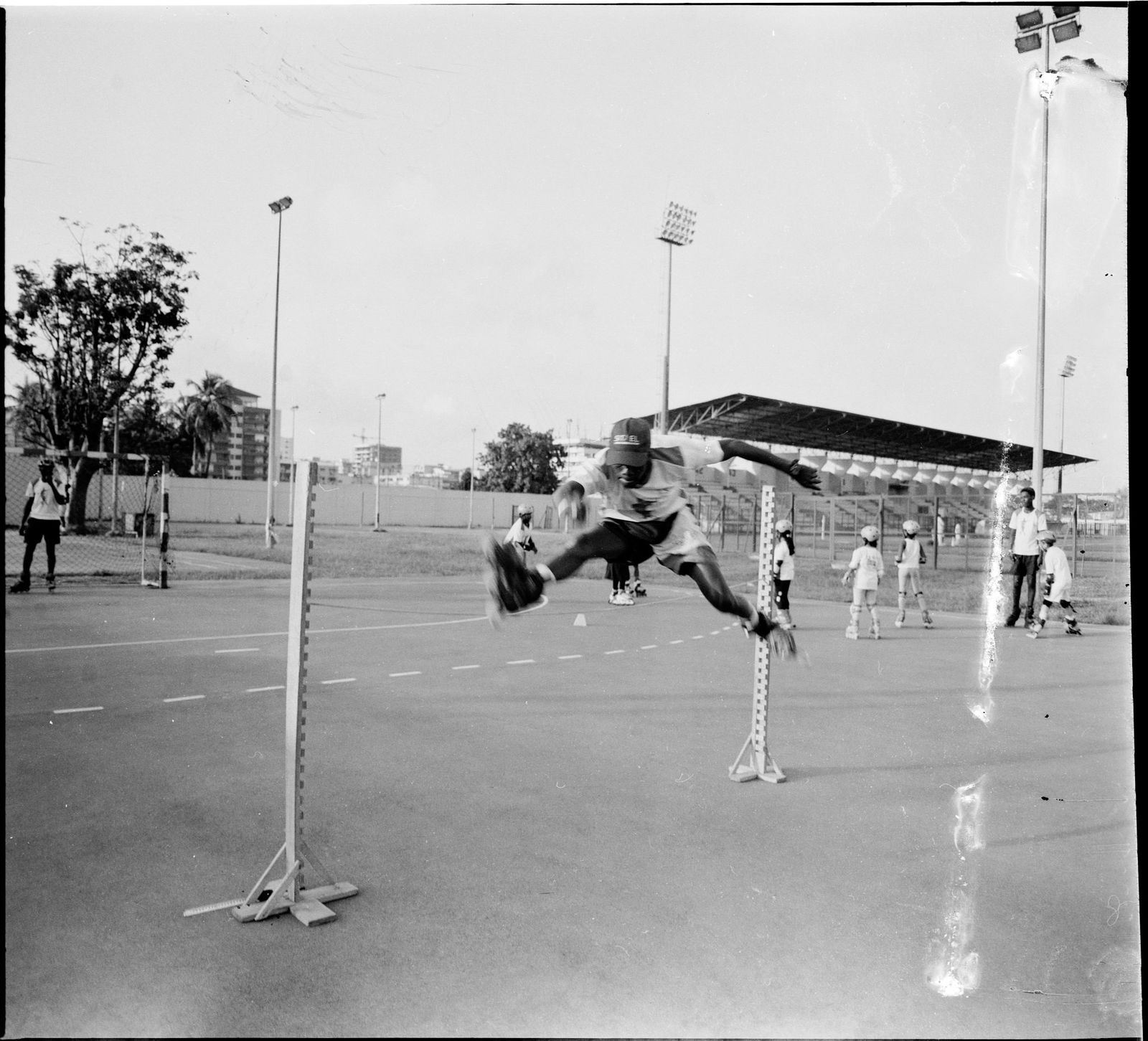
Unable to afford digital equipment, Yassine Sellame began buying second-hand film cameras from flea markets and shooting with whatever he could find. He taught himself how to develop and scan negatives independently, gradually building a practice rooted entirely in analogue photography. Years later, he would invest in a Mamiya RB67, a camera now closely tied to his work. What began as a necessity became central to his visual language. “The first time I saw my developed photos, I was immediately drawn to the process. Analogue photography became essential to me because of its rawness, its texture, and the way it naturally aligned with skateboarding.”
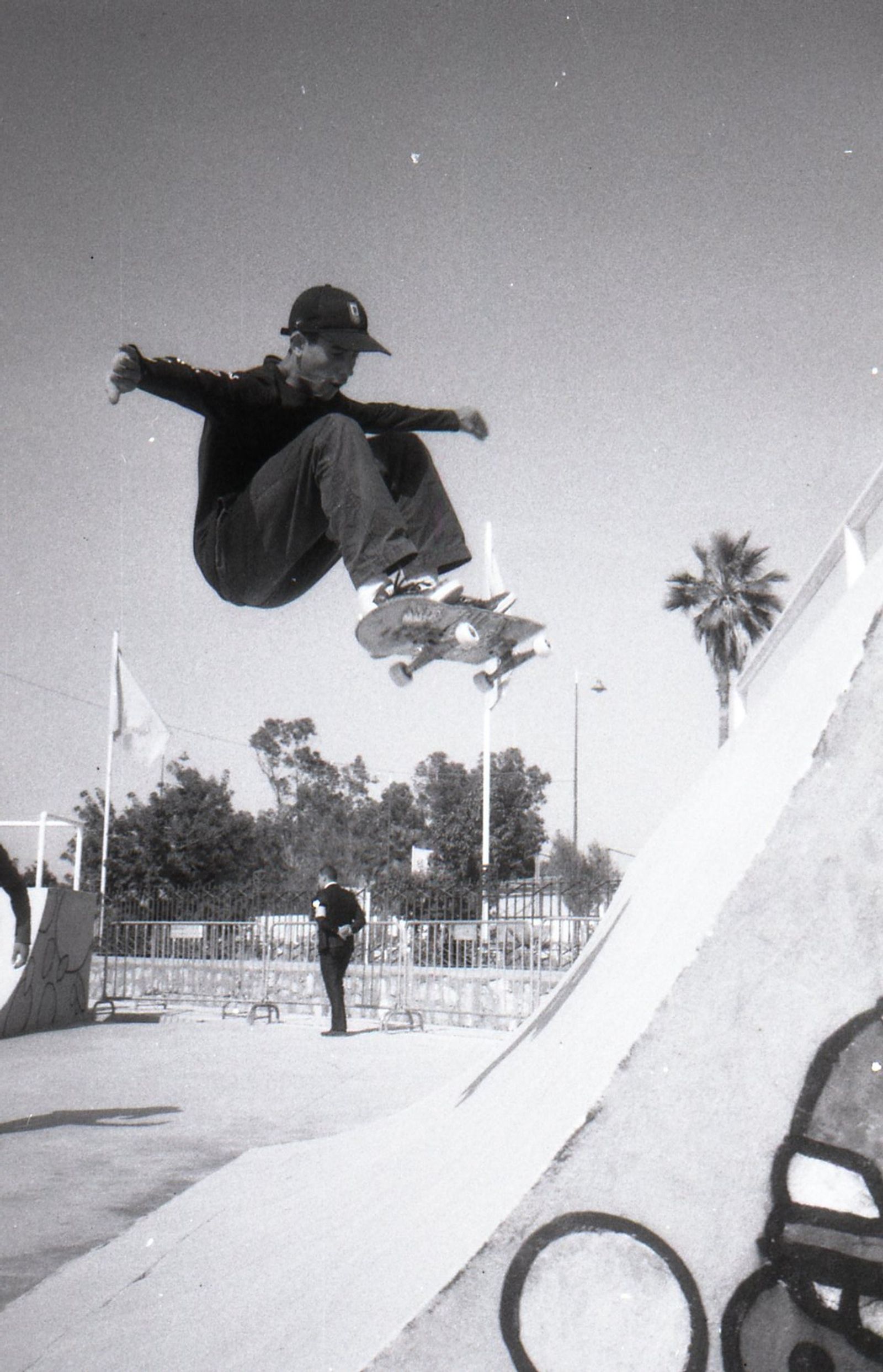
Over time, photography became inseparable from the way he experienced skating. Between 2016 and 2021, Sellame travelled extensively across Morocco, chronicling skaters and skateparks in cities including Casablanca, Tangier, Rabat, Agadir, Fes and El Jadida.
In 2019, Sellame relocated to Casablanca to spend time shooting at the newly rebuilt Nevada Skatepark, widely regarded as the largest skatepark on the African continent and one of the city’s key gathering points for skaters. It was there that he met David and Rayan, two Ivorian students who would later reconnect him to a wider West African creative network. In 2023, while visiting family in Abidjan, Sellame spent a month recording the daily lives of skate collectives, musicians and artists across the city.
“As I travelled across Morocco, discovering new spots, I realised how the city itself was shaping me,” he explains. “It started to feel like a playground of possibilities.” That understanding of the city as something active rather than static runs through Sellame’s photography. His images rarely isolate skateboarding from its surroundings. Instead, they pay equal attention to architecture, gestures, clothing and atmosphere. Casablanca’s plazas, finance districts, medinas and oceanfront promenades have increasingly become part of the visual language of Moroccan skateboarding.
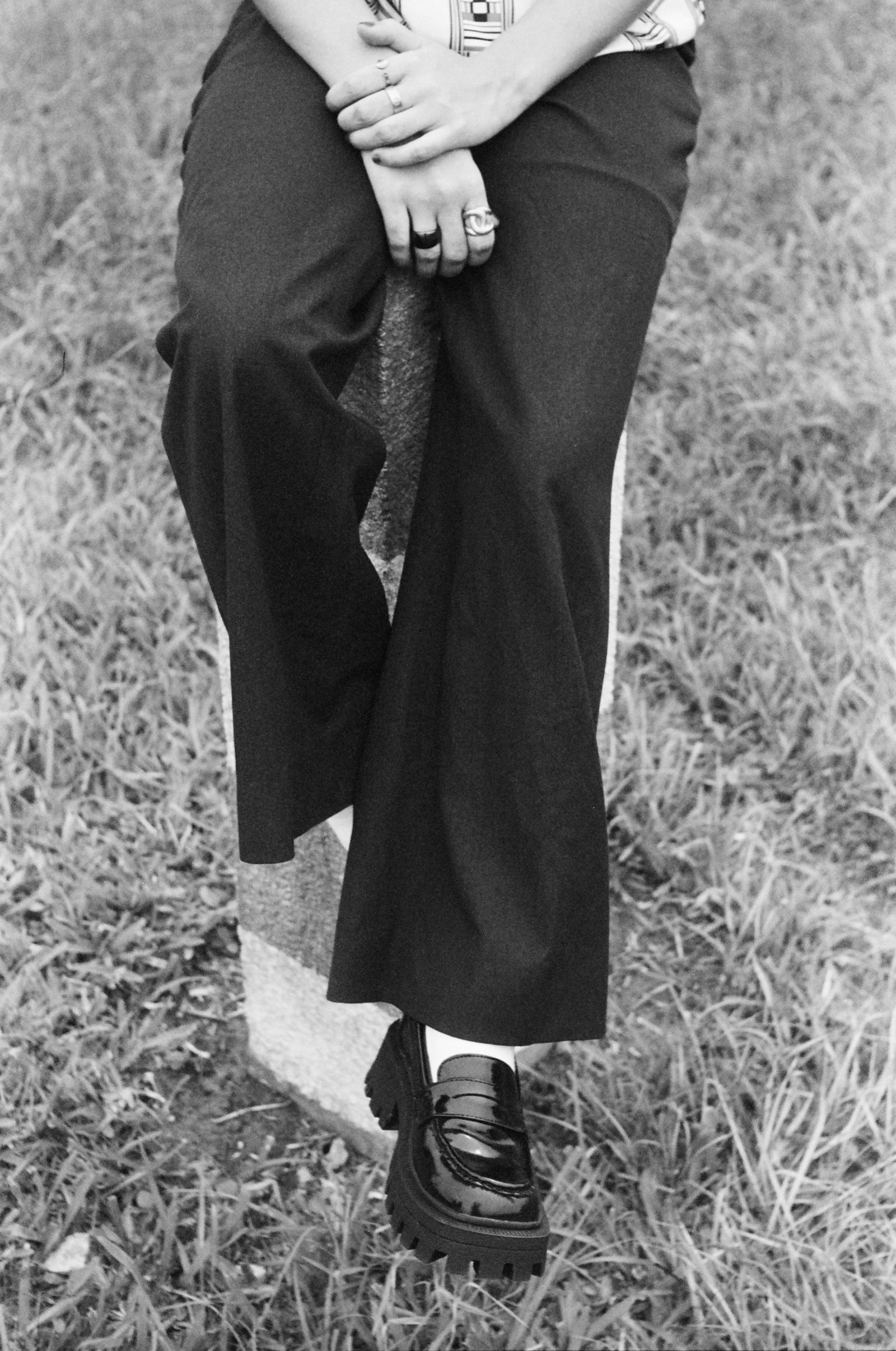
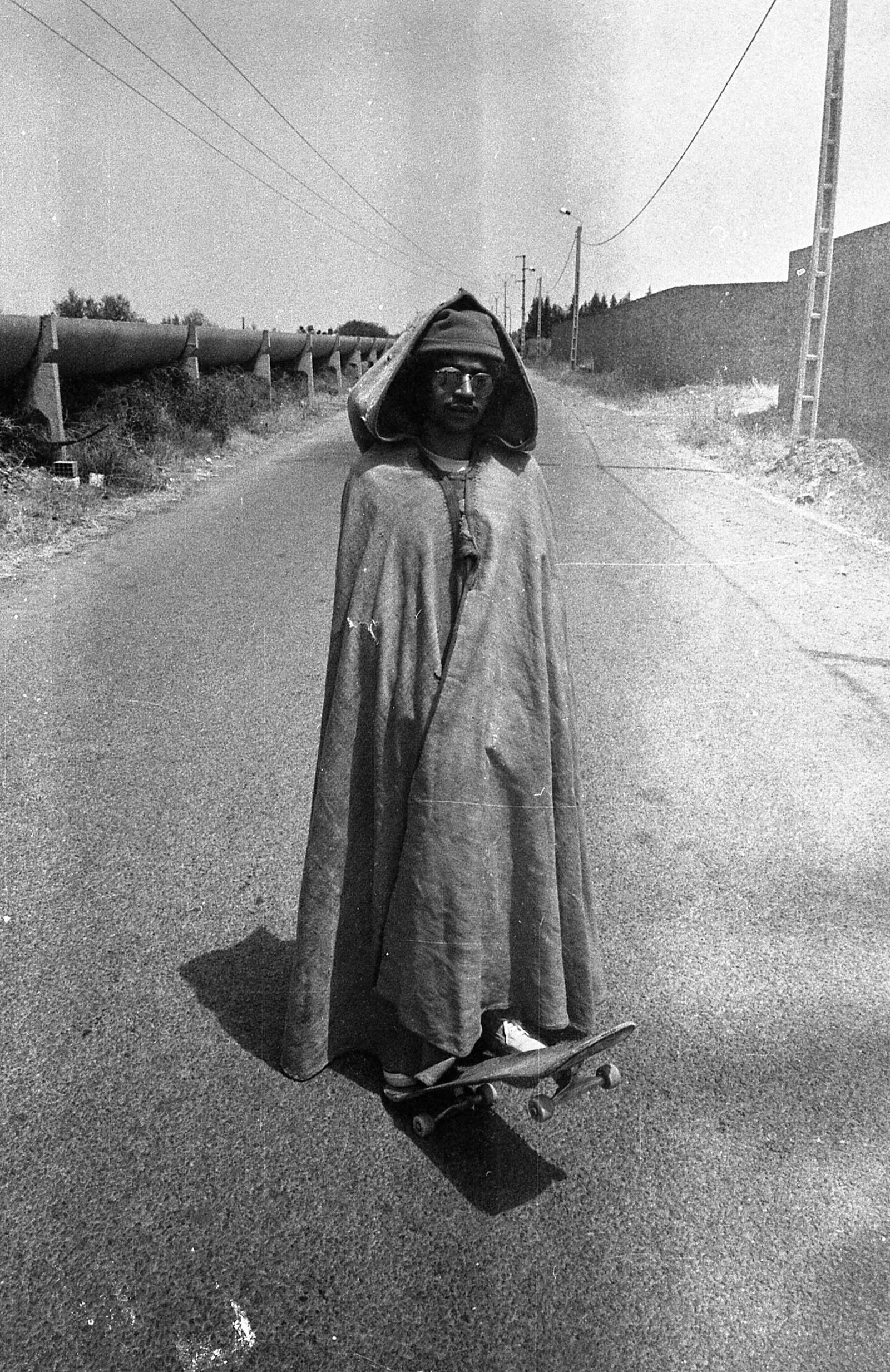
“I focus on capturing the aesthetics that shape the skate community, clothes, shoes, portraits, and everyday details,” Sellame says. His photographs are often accompanied by diaristic captions noting where the image was taken, who was there and what the moment meant to him personally, turning the archive into something closer to a living document of the scene. That sensitivity to detail feels especially significant in Morocco, where skateboarding has historically existed on the edges of mainstream culture.
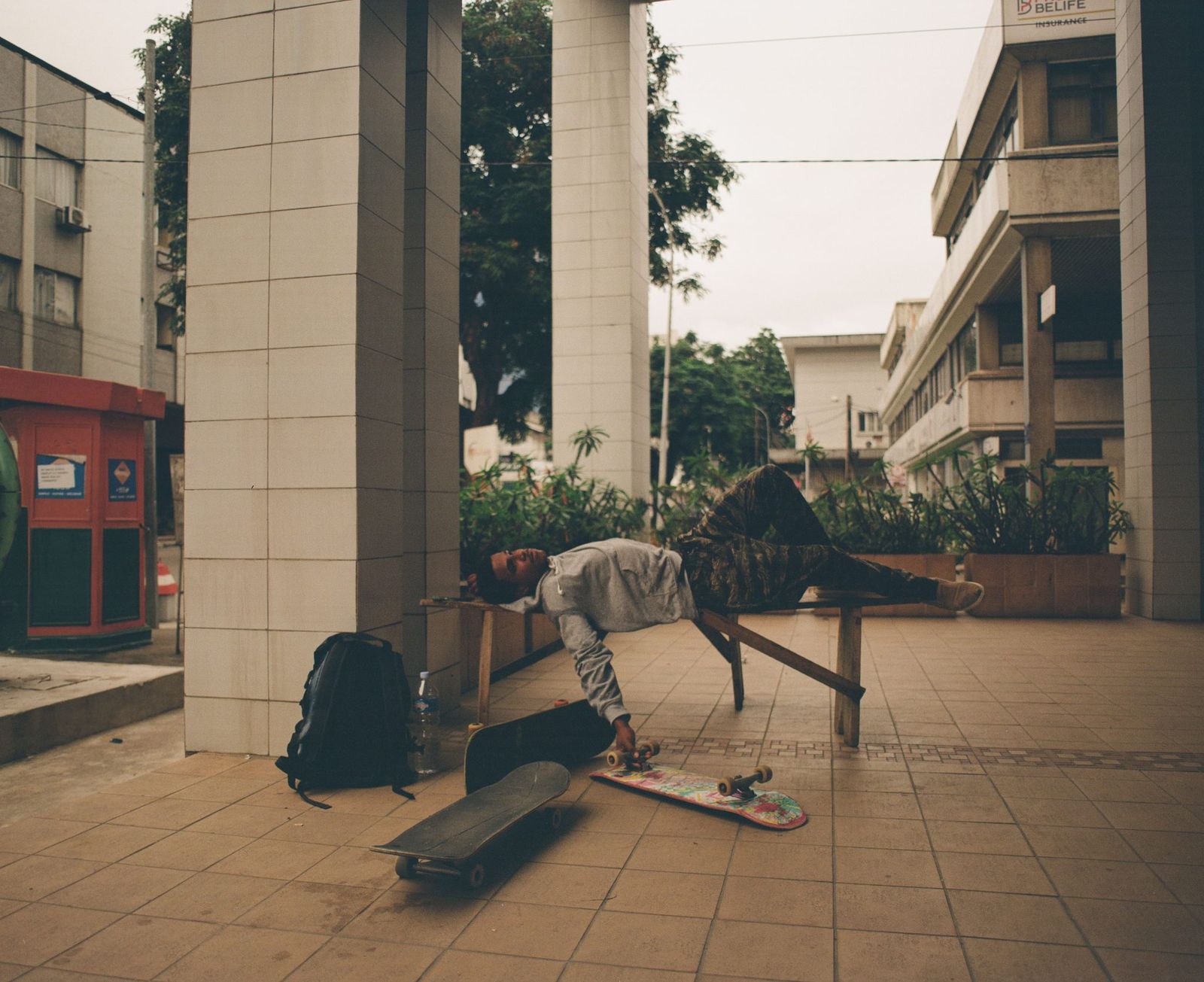
“For a long time, skateboarding here wasn’t really captured beyond quick social media clips,” he says. “Still, for me, I really value slow documentation and taking time, letting the moments breathe, because it’s harder, but it preserves something more real in this fast-paced digital life.”
In 2017, when film development became increasingly difficult to access locally, he began developing negatives himself. Friends guided him through timing and technique until the process became second nature. Medium format 120 film soon became a particular focus, slowing photography down even further.
That slower pace mirrors the way Yassine Sellame speaks about skateboarding itself. While outsiders often reduce it to spectacle or sport, he frames it more as a way of moving through cities and building relationships. His photographs are as interested in the moments between tricks as the tricks themselves: skaters waiting at spots, worn trainers on concrete, conversations after dark, empty parks at sunset, improvised routes through cities not designed with skateboarding in mind.
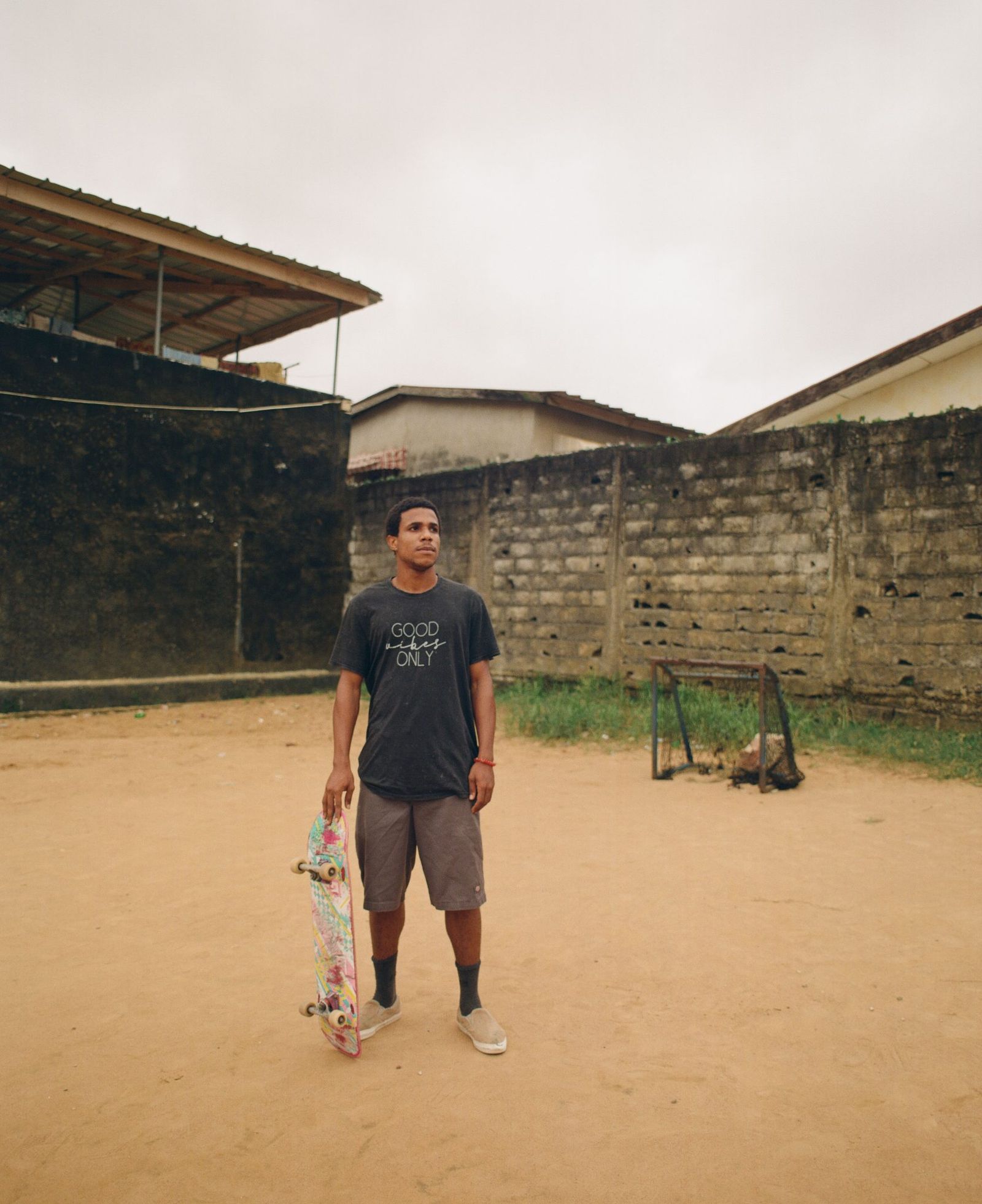
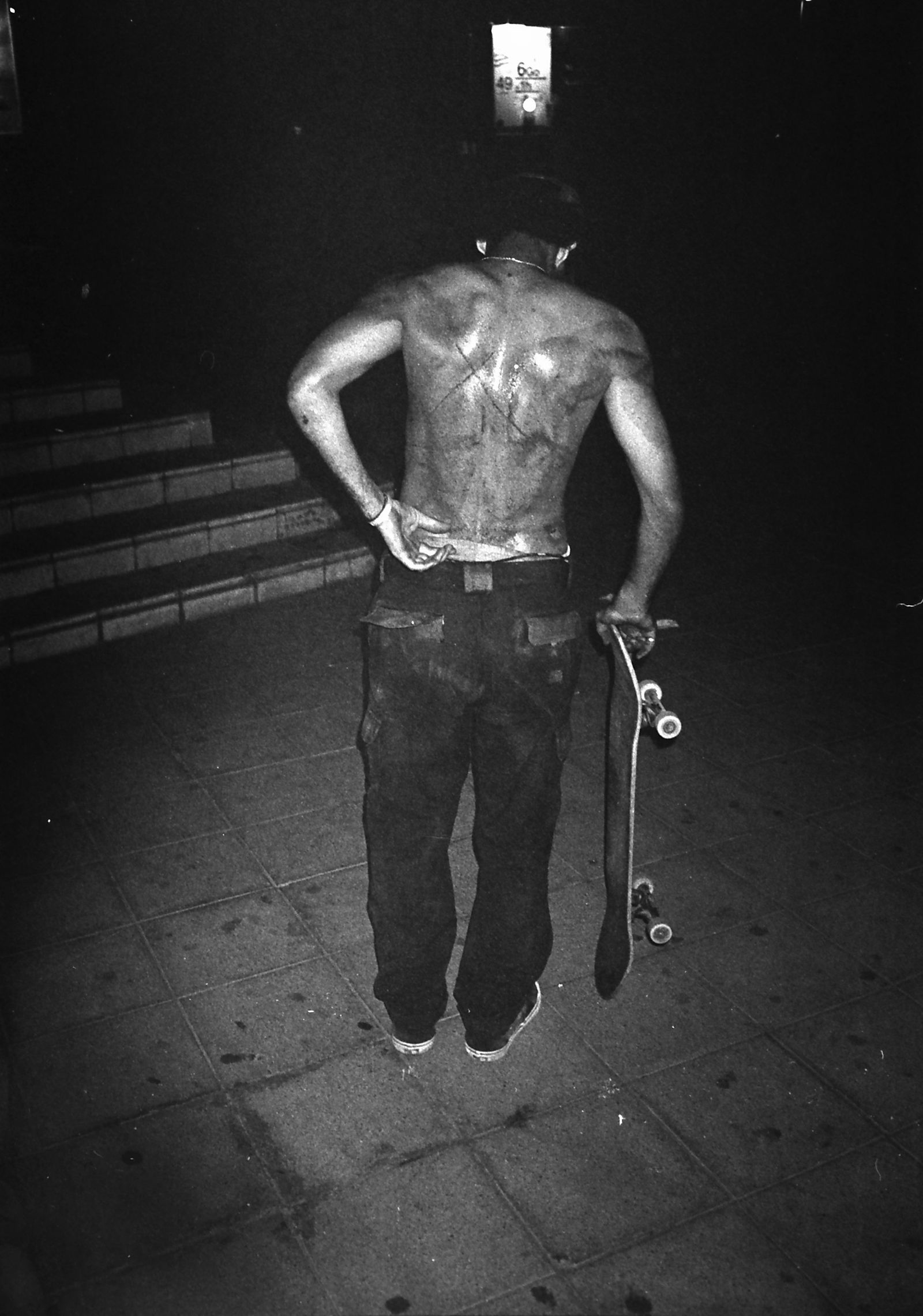
At the same time, skateboarding in Morocco has become increasingly visible. Across the country, skateparks have begun appearing alongside football pitches and basketball courts, reflecting a broader institutional recognition of the sport. “Today, the skate scene across Morocco is really changing,” Sellame says. “More people know about skateboarding now, but they still don’t fully understand its culture, how it started and how it’s evolving.”
Much of that mainstream awareness spiked when skater Aya Asaqas made history at the Paris 2024 Olympics as the first Moroccan and Arab woman to compete in the sport. While her presence on the world stage drew massive national attention, it also highlighted the gap between public perception and the core of the subculture.
“People mostly recognise skateboarding as a sport now, especially since athletes like Aya,” Sellame says. “That exposure drew a lot of attention, but also some criticism – people judged her performance without really grasping what skateboarding actually means.”
The distinction matters to him. Skateboarding, as Sellame describes it, cannot be separated from the communities and creative networks surrounding it. The scene overlaps naturally with music, fashion, graffiti, photography and filmmaking. “Skating and photography are deeply intertwined. When you’re a skateboarder at the spot, you naturally meet other creatives,” he says. “You might find a rapper who skates, a photographer who skates, or other artists who just get it.”
That crossover has become increasingly visible within Moroccan youth more broadly. Streetwear, music and skateboarding now feed into one another in ways that barely existed when Sellame first started skating in Marrakech. Skate collectives have evolved into wider creative communities spanning merchandise, film, music and exhibition-making.
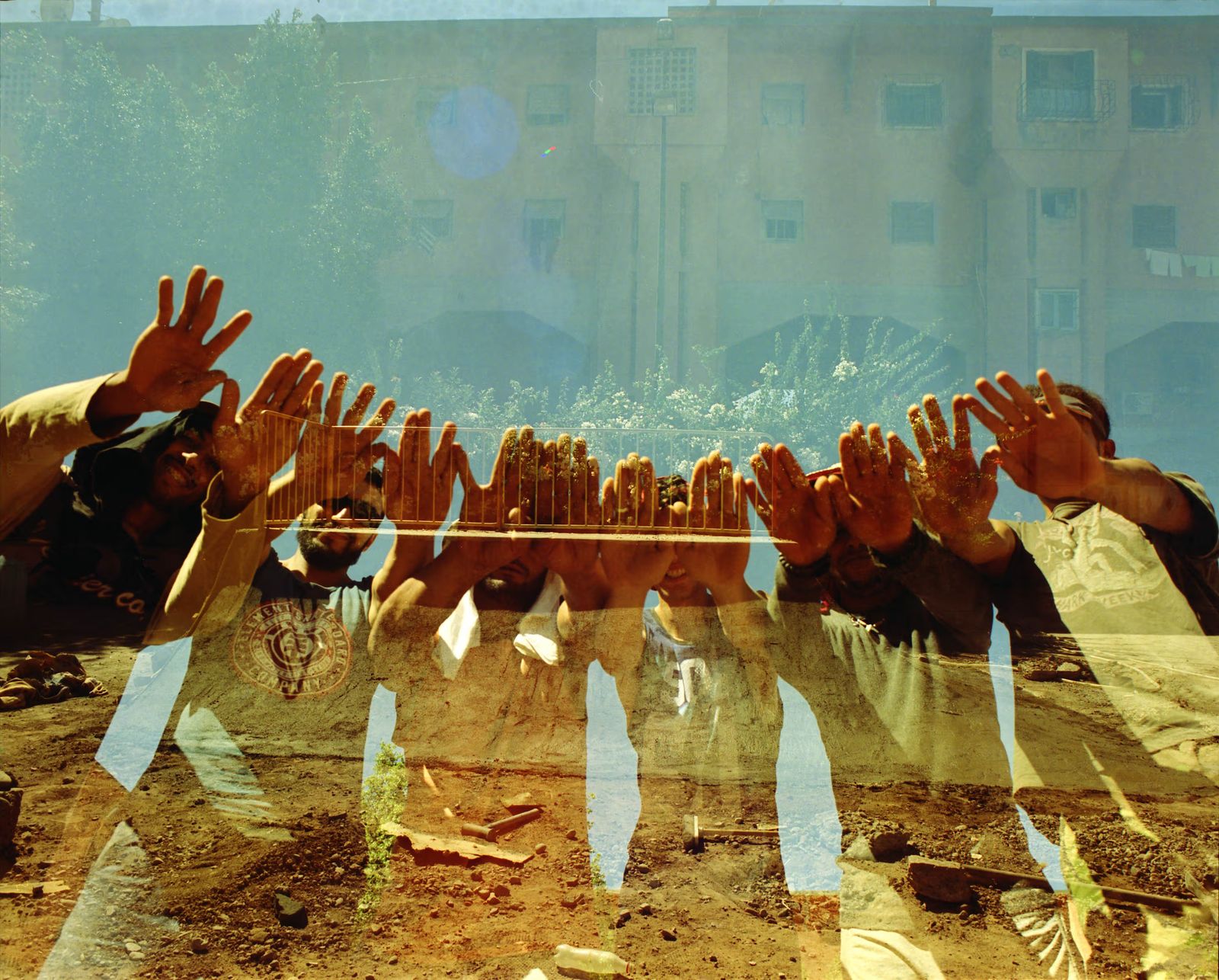
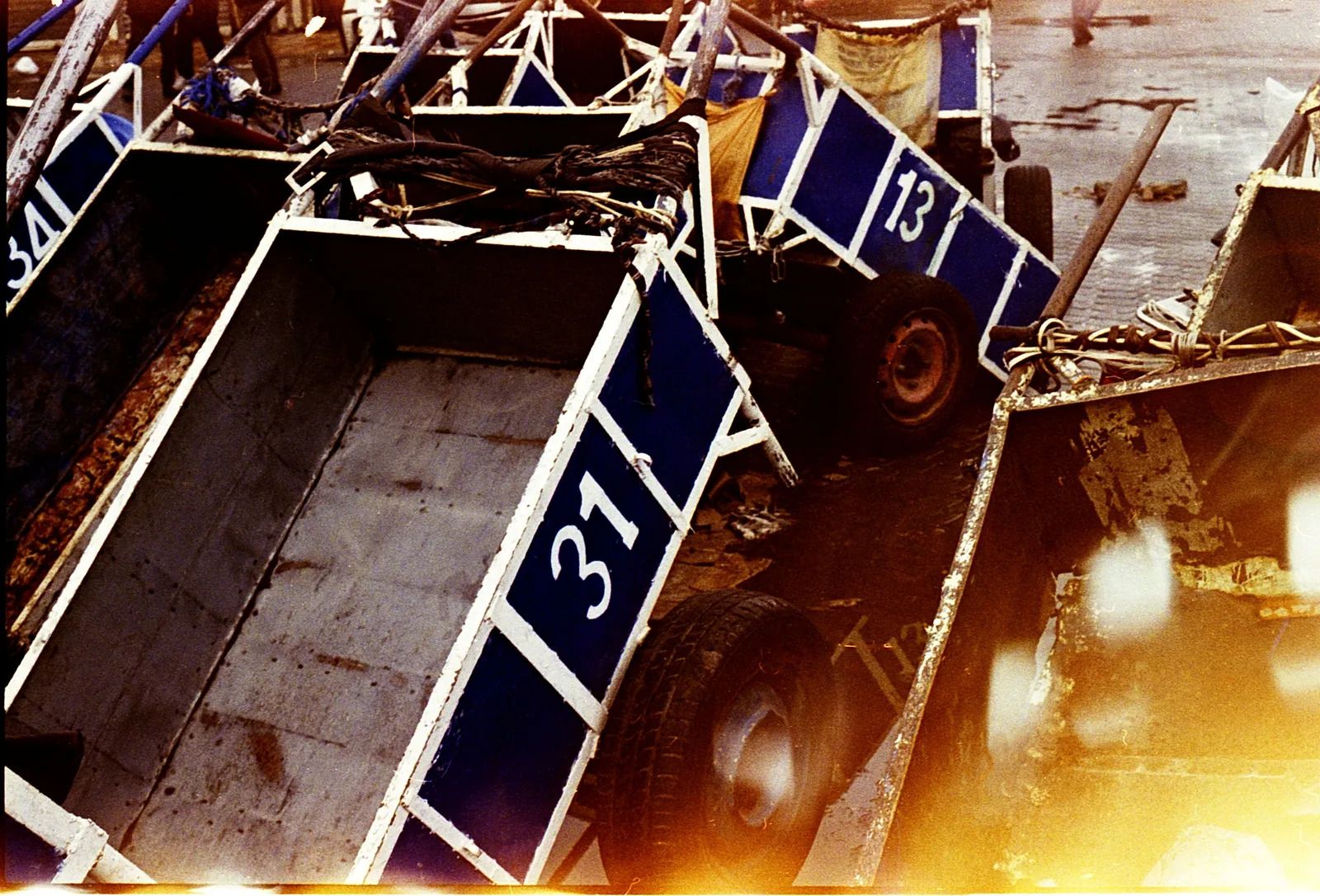
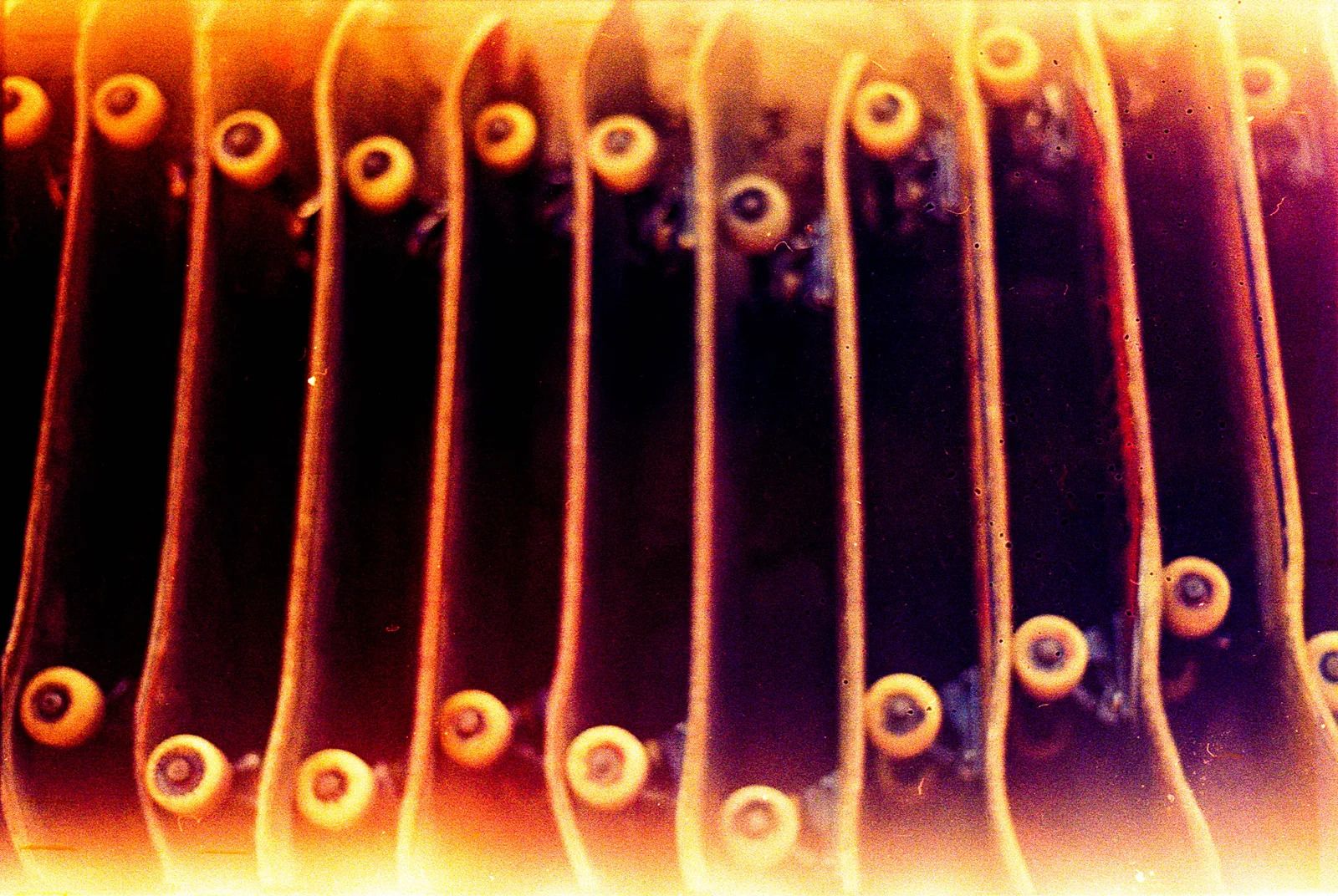
That intersection between skateboarding, photography and urban life recently culminated in Wheels in Motion, a joint exhibition with photographer Salaheddine Elbouaaichi presented through the Riad Alena artist residency in Marrakech and later exhibited during the 1-54 Contemporary African Art Fair. The exhibition explored the wheel as a recurring visual language within the city, linking skateboards, bikes, scooters and everyday movement across urban Marrakech.
.%20.jpeg)
Momentum has also come from Nassim Lachhab, the first African professional skateboarder, whose partnerships with major skate brands have brought international attention to Morocco’s scene. Social media has accelerated that visibility further, connecting skaters across cities that once felt isolated from one another.
Still, growth has brought its own frustrations. Many newly constructed skateparks, Sellame argues, are designed without sufficient understanding of how skaters actually use space. “These parks are often built by people who don’t really know skateboarding, so they end up being awkward like a triangular football field, frustrating for skaters.”
The comment reflects a wider tension visible across many emerging skate scenes globally. Institutional support can provide infrastructure, but skateboarding has historically thrived through improvisation, self-organisation and the urban environment. Poorly designed parks often reveal a disconnect between official investment and the culture itself. Even so, Sellame remains optimistic about the direction Morocco’s skate scene is moving in.
“My dream is to spend a month in each city, working with local skaters, helping them build a stronger sense of community,” he says. “The good side is, there are so many skaters now, more technical, more diverse in their style, streetwear is also booming, intertwined with skate culture.”
That sense of community remains central to nearly everything he describes. In Casablanca, Sellame became closely involved with Beurdies, a skate collective involved in events, merchandise, photography and music. Through the collective, he moved further into networks connecting skaters with rappers, graffiti artists, filmmakers and designers across Morocco. In the Ivory Coast, local skaters introduced him to artists and designers. In Athens, encounters through the skate community led to collaborations with musicians and filmmakers from across Africa. The scene functions less like a fixed subculture and more like an informal creative ecosystem built through movement, travel and shared spaces.
In 2022, after years focused on a marketing master’s degree and later working within Casablanca’s communications industry, Sellame reconnected more directly with skating through a project with the Concrete Jungle Foundation. The organisation approached him to help build a skatepark for an orphanage in Tamesloht, just outside Marrakech.
..jpg)
“That project, the construction and the documentation, brought me right back into skate culture,” he says. It also deepened relationships that continue to shape his life and work today. “I started spending time with skaters again.” One in particular, he tells me about is Mohamed El Mhaour, otherwise known as ‘Hanota The Pirate’. “We helped him to try to get a visa to attend skate competitions, supported him in the project, and even watched him learn English. I feel like he’s a brother, and he sees me that way too.”
.jpeg)
The emotional honesty of that relationship speaks to something often overlooked in conversations around skateboarding. Beneath the aesthetics, brands and visibility, scenes are ultimately sustained through mutual support. For many young skaters, especially in places where creative industries remain unstable, community becomes a practical necessity as much as a social one.
Yassine Sellame is candid about those pressures. Despite growing visibility, Morocco’s skate scene still lacks much of the sponsorship and infrastructure available in larger European or American skate markets. Financial instability, uncertain freelance work and mental health struggles exist alongside the freedom and creativity skateboarding offers. “One day you’re dreaming about filming, but then you’re just fighting to make a living, and that pressure, it hurts,” he says. “I feel that deeply. But I stay with them, stay positive, we keep skating, we keep having fun, and I keep creating, even when freelancing is hard sometimes, with delayed payments or uncertainty. But I keep going.” @yassellame


